

Description
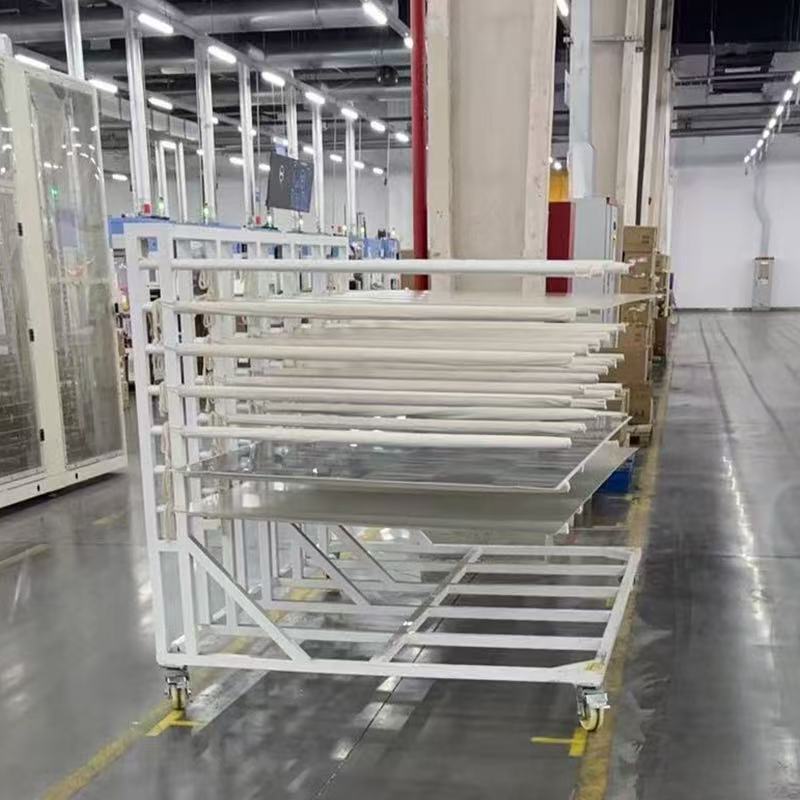
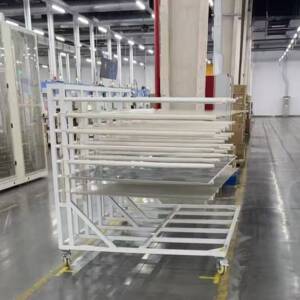
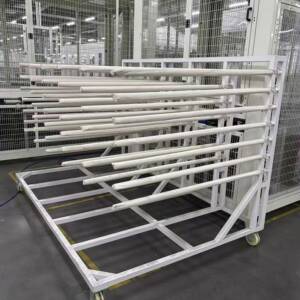
The Buffer cart is a vital tool for production logistics and process management. It serves far more purposes than merely holding items. It ensures the production flow runs smoothly, efficiently, and safely.
Core function
“Buffer reservoirs” between process steps
This is its most fundamental function. A PV production line consists of multiple sequential processes. These include laminating, framing, junction box installation, and testing. However, their production cycles cannot perfectly synchronize.
Balancing cycle time differences: The previous process may output faster. For example, the laminator can produce quicker. Output modules can temporarily stay on the buffer cart. This prevents buildup at the workstation. It avoids clogging the production line. Meanwhile, it supplies the next process steadily. Processes like framing receive a stable material flow. This ensures they never stop from waiting.
Handling brief interruptions: A station may pause for adjustments. Changeovers or temporary faults can cause this. The buffer cart stores components from both sides. It allows the rest of the line to keep running. This minimizes the impact of a local stoppage. Overall production efficiency is thereby ensured.
Ensuring quality and safety
PV modules are very fragile, especially after lamination. Their surface glass and backsheets scratch extremely easily.
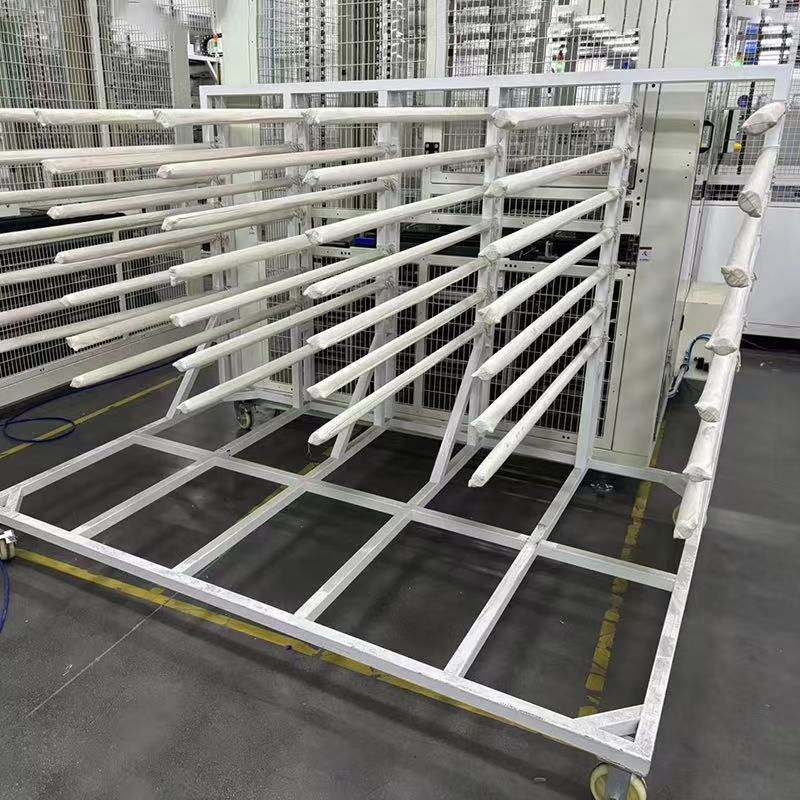
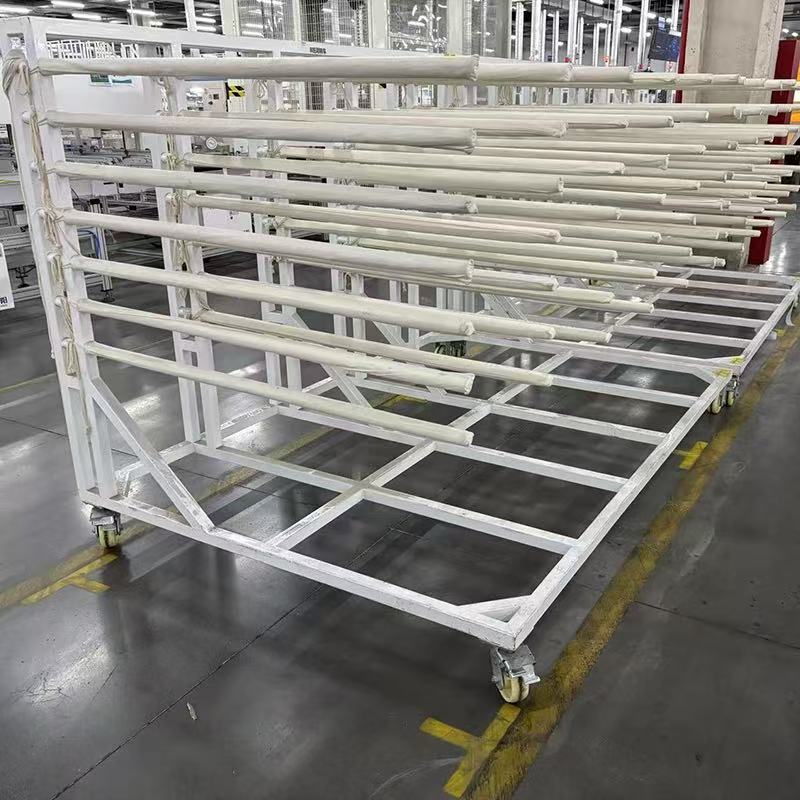
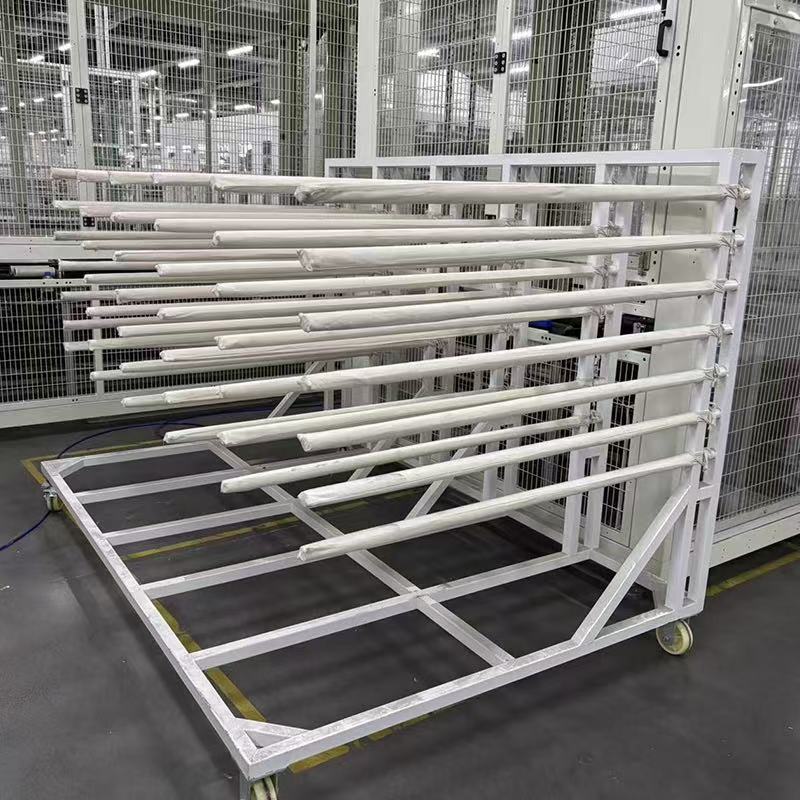
The support arms feature EPE foam or silicone pads.They provide soft, non-scratching support for the modules. This prevents micro-cracks or cosmetic defects during handling.
It stores the modules in a parallel manner.A safe distance is maintained between each module. Direct stacking is strictly prohibited. This prevents pressure-induced breakage. It also avoids mutual friction.
Achieve flexible flow and handling
Its wheeled design creates a mobile storage buffer. Once fully loaded, operators easily push the entire batch to the next station. This reduces the frequency of single-unit handling. It also lowers the physical labor intensity.
It offers high flexibility. The cart is not fixed to one location. It can adjust the module flow path flexibly. Adjustments are based on production plans or order priorities. It also handles exceptions. Abnormal modules can be temporarily stored on a nearby cart. Operators fetch modules from it in sequential order. The Buffer Cart acts like a reservoir. It absorbs production cycle variations. This allows both processes to run continuously. Each process can operate at its maximum efficiency.
Auxiliary function
Production Management and Process Control
WIP visualization: The quantity on the Buffer Cart reflects inter-process status. It clearly reveals production bottlenecks. Managers can observe the cart’s current stock level. They quickly determine whether production is balanced.
A single mobile storage rack holds modules from one batch. This facilitates traceability and quality management.
Storing modules parallel on dedicated carts saves significant space. This method beats spreading them on floors or workbenches. It makes the workshop tidier. It also keeps access pathways clear.
In summary, Buffer Carts enable continuous flow within PV module workshops. They safeguard product yield rates effectively. These units boost logistical efficiency considerably. Management flexibility is also enhanced by their use. This equipment forms an indispensable foundation. It transcends the role of simple material handling. The system operates as a production stabilizer. Furthermore, it acts as an operational lubricant.
Product Showcase
Reviews
There are no reviews yet.